



Foodservice rebate management is how a food distributor tracks, invoices, and collects the rebates and allowances it earns from suppliers. It covers the full lifecycle of every program: setting up the terms, accruing what is owed as purchases happen, invoicing suppliers, reconciling the payments, and collecting the money. Done well, it makes sure a distributor keeps every dollar of earned income it has already worked for. Done by hand, it is where that income quietly slips away.
This is the complete guide to rebate management for food distributors: what it is, why foodservice makes it so complex, the program types you are managing, how the process works end to end, and what to look for in rebate management software.
Key takeaways
- Foodservice rebate management is the practice of tracking, invoicing, and collecting the rebates and allowances a distributor earns from suppliers, across the full program lifecycle.
- It's part of distributor profitability management, the broader discipline of managing every source of earned income in one place.
- Foodservice is uniquely complex: redistributor sales, pass-throughs, buying group clawbacks, deviated pricing, and SLA exemptions all change what you are owed.
- There are five common program types: volume-based rebates, growth incentives, off-invoice allowances, bill-backs, and marketing funds.
- Earned income is a large share of distributor profit.
What is rebate management in food distribution?
Rebate management in food distribution is the practice of tracking, invoicing, reconciling, and collecting the rebates and allowances a distributor earns from its suppliers. It spans the entire lifecycle of a program, from the terms agreed with a manufacturer to the earned income that lands on the distributor's books. The goal is simple: collect every dollar you are contractually owed, without losing hours to manual work.
Rebate management sits inside a bigger idea, distributor profitability management, which is the practice of managing every source of a distributor's earned income, including rebates, allowances, supplier programs, and customer-level performance data, in a single system so that every dollar earned becomes a dollar collected.
It matters because back-end earned income is not a side account for a distributor. It's a core part of how the business makes money. The programs are where a large share of the real profit lives, so managing them well is the difference between a healthy year and a break-even one.
Why is foodservice rebate management so complex?
Foodservice rebate management is complex because a single distributor runs hundreds of programs across dozens of suppliers, each with its own terms, dates, rates, and dependencies. Purchases routed through redistributors, pass-throughs, buying group clawbacks, deviated pricing, and SLA exemptions all change what a distributor is actually owed. Miss one dependency, and the rebate you earned never gets claimed.
Behind one supplier relationship you might be tracking volume tiers, growth targets, marketing funds, off-invoice deals, and bill-backs at the same time.
Several foodservice-specific wrinkles make it more complex compared to general B2B rebate management:
- Redistributor sales. Cases bought through a redistributor often never get counted toward program totals unless you specifically capture them.
- Pass-throughs. Money that moves through the distributor to another party has to be tracked without being double-counted.
- Buying group and GPO clawbacks. Programs run through a buying group can be reduced or reclaimed under specific conditions, which reshapes what you keep.
- Deviated pricing. The gap between list price and an agreed operator price gets billed back to the manufacturer, and it is a leading source of deduction complexity.
- Mid-program changes and SLA exemptions. Suppliers add items or locations, and terms shift during the year. If nobody updates the tracking, those changes go uncaptured.
This complexity is exactly why so much earned income goes uncollected, and why the manual approach carries a real price. We cover the mechanics in why earned income leaks and put numbers on it in what manual rebate tracking costs.
What are the main types of rebate and allowance programs?
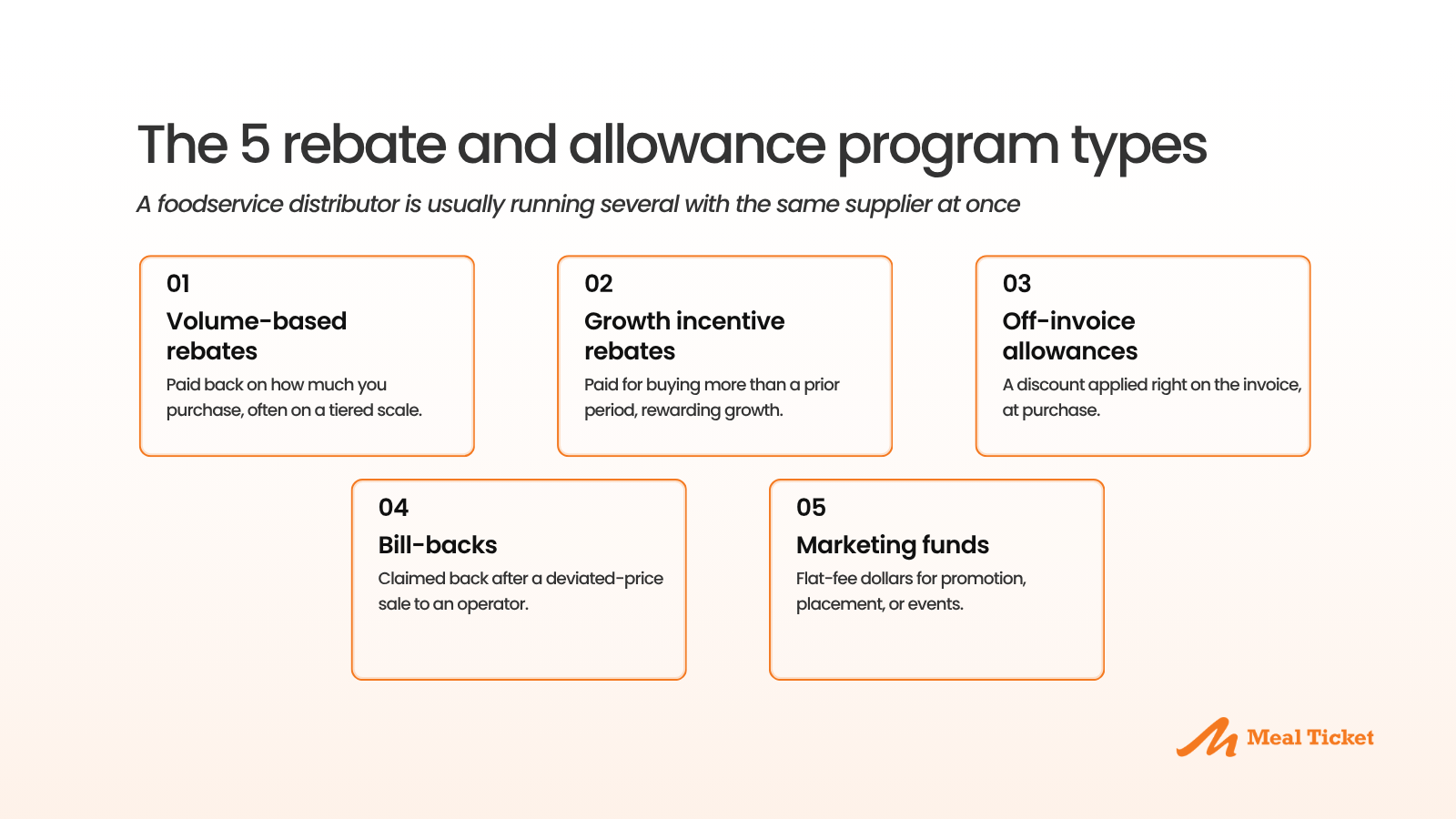
Most foodservice rebate management comes down to five program types. A distributor is usually running several of them with the same supplier at once.
Volume-based rebates
Volume-based rebates pay a distributor back based on how much it purchases, often on a tiered scale where higher volume unlocks a higher rate. They reward total purchasing and are the most common program type.
The catch is the brackets. If nobody is watching progress against a tier in real time, a distributor can finish just short of the next bracket and never know it left money on the table.
Growth incentive rebates
Growth incentive rebates pay for buying more than a prior period, rewarding year-over-year or quarter-over-quarter growth rather than raw volume. They are how suppliers encourage distributors to expand a category.
Because they hinge on a moving target, growth incentives need accurate baselines and current tracking. A stale baseline quietly distorts what you're owed.
Off-invoice allowances
Off-invoice allowances reduce the price at the moment of purchase, appearing as a discount right on the invoice rather than a payment later. They're simple to apply but still need to be recorded so their value is captured in your true cost and margin.
Many off-invoice allowances are negotiated in bulk at events. That's one reason distributors prepare with data before a buying group show, where a year of allowance terms gets set.
Bill-backs
A bill-back is money the distributor claims back from a manufacturer after the sale, typically to cover the difference between what it paid and a deviated price offered to an operator. The distributor fronts the deal, then bills the supplier to recover it.
Bill-backs are among the most reconciliation-heavy programs, because every claim has to be documented and matched to the underlying purchases before the manufacturer will credit it.
Marketing funds
Marketing funds are dollars a supplier commits to promotion, often as a flat fee tied to a program, catalog placement, or event. They're earned income, and they belong in your rebate management even though they're not tied to a per-case rate.
Marketing funds are easy to under-collect precisely because they do not look like a rebate. Tracking them alongside everything else keeps them from being forgotten.
How does the rebate management process work, step by step?
The rebate management process runs in five stages: enter the program terms, accrue what is owed as purchases happen, invoice the supplier, reconcile the payment, and collect and report. Each stage is where earned income can either be captured or lost, and the handoffs between them are where manual processes break down.
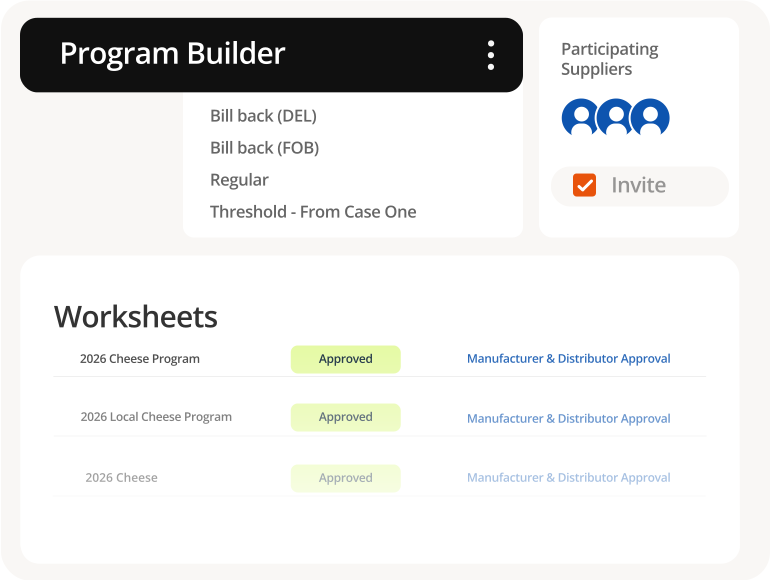
Program entry and setup
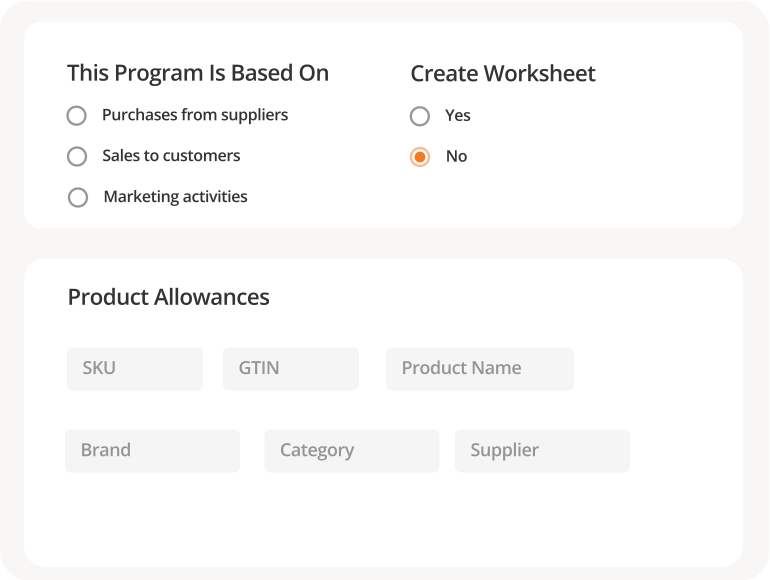
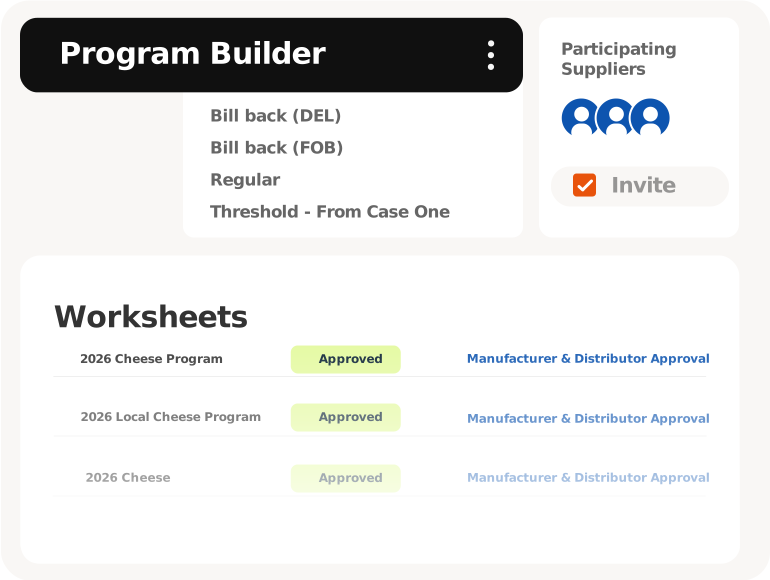
Every program starts with its terms: rates, dates, tiers, exclusions, and dependencies, entered accurately so the system knows what to look for. Getting this right at the start means accurate calculations.
Accrual and tier tracking
As purchases happen, the system accrues what the distributor is owed and tracks progress against volume and growth tiers in real time. This is the stage that lets purchasing steer spend toward the next bracket while the window is still open, instead of finding out afterward.
Invoicing and claims
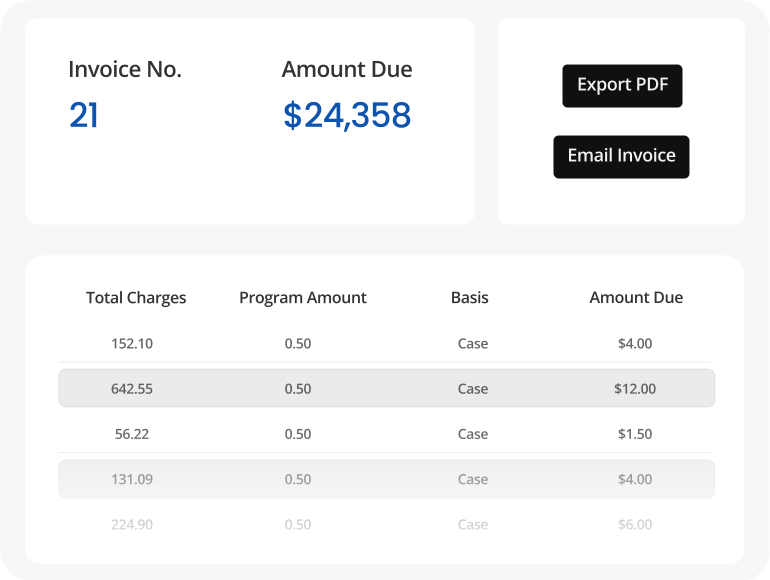
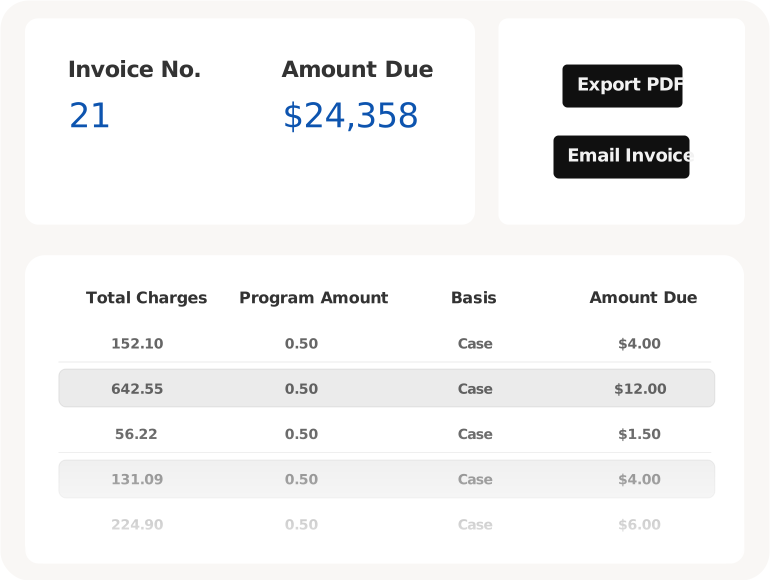
When a program period closes or a bill-back is triggered, the distributor invoices the supplier, ideally with full purchase reconciliation behind every claim so there's nothing to dispute. Auto-generated, date-driven invoices replace the slow manual build.
Reconciliation
Payments get matched back to the claims that earned them. Disputed deductions and mismatched SKUs get resolved here, and a clean audit trail is what keeps a dispute from becoming a write-off.
Collection and reporting
Finally, the earned income is collected and reported, so the distributor can see true profitability by product, customer, and program. This is where rebate management stops being a back-office chore and becomes a source of strategy.
What is rebate management software for food distributors?
Rebate management software for food distributors is a purpose-built platform that automates the full program lifecycle, from entry and accrual to invoicing, reconciliation, and reporting. Unlike a spreadsheet, it's designed for foodservice complexity, so it can track redistributor sales, pass-throughs, buying group clawbacks, and deviated pricing without manual workarounds.
The right platform does a few things a spreadsheet never will:
- Consolidates sales, purchase, and program data into a single source of truth.
- Accrues earned income automatically and tracks tiers in real time.
- Auto-generates date-driven invoices with reconciliation built in.
- Shows true adjusted gross profit by product, customer, and program.
- Automatically picks up new supplier products and locations so nothing falls through the cracks.
This is what TrackMax+, by Meal Ticket was built to do. It brings rebate and allowance management, distributor insights, and supplier programs into one platform built specifically for the complexity of foodservice distribution. Distributors on the platform have increased purchase rebate income by 1% to 3%, reduced leakage by up to 2%, and shortened vendor A/R cycles from 90 days to as little as one week.
The takeaway for any distributor still running programs by hand: rebate management is not a back-office task. It's a profit center, and it deserves the tools to be treated like one. Book a demo of TrackMax+ today.
Frequently asked questions
What is the difference between a rebate and an allowance?
A rebate is money a manufacturer pays a distributor back after the fact, usually based on how much the distributor purchased or grew. An allowance is money offered up front or off the invoice to promote or move a product.
Both are forms of earned income, and most distributors manage them together as rebates and allowances, because the same programs and suppliers produce both.
What is earned income in foodservice distribution?
Earned income is the money a distributor collects from suppliers through rebates, allowances, and program agreements, on top of the gross margin it makes selling product. It is often called back-end income because it arrives after the sale.
For many distributors it is a large share of bottom-line profit, which is why capturing all of it, rather than most of it, is what separates a strong year from an average one.
Who is responsible for rebate management at a food distributor?
Rebate management usually spans finance, procurement, and sales. Procurement negotiates the programs, finance tracks and invoices the earned income, and sales needs visibility into which products carry the best programs.
Because it crosses departments, rebate management breaks down when the data lives in separate systems, and it works best when everyone is looking at one source of truth.
Can an ERP handle foodservice rebate management?
Not on its own. ERPs record transactions, but they were not built for the dependencies of foodservice rebate programs, such as redistributor sales, pass-throughs, buying group clawbacks, and SLA exemptions.
Most distributors end up bridging the gap with spreadsheets, which is exactly where earned income starts to leak and hours start to disappear.
How is foodservice rebate management different from other industries?
Foodservice adds layers most industries do not have: purchases routed through redistributors, buying group and GPO programs with clawbacks, deviated pricing, and a long tail of specialty suppliers, each with its own terms.
The sheer volume and variety of programs is what makes foodservice rebate management uniquely complex, and why general-purpose tools struggle with it.
What is trade spend in foodservice distribution?
Trade spend is the money suppliers invest in programs, allowances, and promotions to drive distributor and operator purchasing. From the distributor's side, capturing your share of that trade spend as earned income is the goal of rebate management.
Visibility into it is what turns program management from a cost of doing business into a profit lever you can actually pull.