


To prepare for a buying group show, treat it as a negotiation. For each manufacturer you plan to meet, pull your purchase history and current program terms, decide the one outcome you want from the conversation, and know your alternatives before you sit down. Distributors who prepare with their own data walk out with better allowances.
Every general guide to supplier negotiation says the same thing: gather your spend data, set clear goals, and know your leverage before the meeting. Here is the part those guides miss for foodservice. As a distributor, you are already sitting on the exact data they tell everyone to go find. This is a playbook for bringing it to a buying group show and using it.
Key takeaways
- A buying group show is where you meet manufacturers as the buyer, through a group like UniPro, Golbon, or Frosty Acres.
- Prepare like a negotiator: bring your data, set one clear goal per supplier, and know your alternatives.
- Your purchase history is your leverage. The volume you already move through a supplier is the strongest argument for a better program.
- Rank meetings by opportunity. Your show calendar is your scarcest resource.
What is a buying group show?
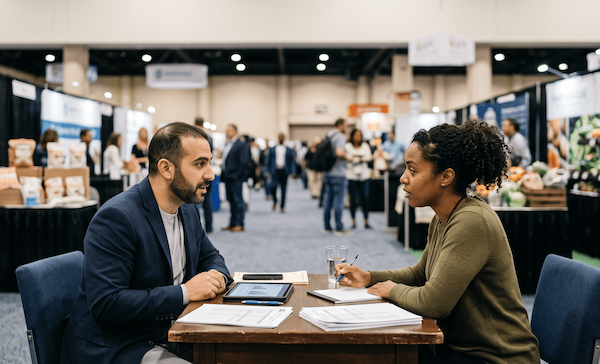
A buying group show is an event hosted by a foodservice buying group or GPO, such as UniPro Foodservice, Golbon, or Frosty Acres Brands, where member distributors meet manufacturers to review programs, negotiate allowances, and lock in commitments. The distributor attends as the buyer, using the group's combined purchasing power to reach terms it could not command alone.
The value of the group is simple: many distributors negotiating together carry more weight than any one of them does apart. That collective leverage is what fills the room.
This is a different job from the food shows most distributors know. When you run your own event, you are the host and the seller. A buying group show flips that. Now you are the buyer, walking a floor of manufacturers who want your commitment.
Why should food distributors prepare for a buying group show?
Food distributors should prepare for a buying group show because it compresses a year of supplier negotiations into a few days. The distributor who walks in knowing its numbers negotiates from evidence and captures better programs.
Thin margins are the whole reason this is worth doing well. When net profit runs under three cents on the dollar, back-end programs and allowances are not a rounding error. They are a meaningful share of what you actually keep. A single point of improved allowance on a high-volume supplier can outweigh a week of new sales effort. You need time to pull data, decide which meetings matter, and book them before the best manufacturers fill their calendars. The same early-planning discipline that separates strong food shows from scrambled ones applies here, just pointed at buying instead of selling.
How should food distributors prepare for supplier meetings at a buying group show?
Food distributors prepare for supplier meetings at a buying group show by treating each one as a negotiation: pull your purchase history and program terms for the supplier, rank meetings by opportunity, set one clear goal, and know your alternatives before you sit down. The steps below turn that into a repeatable pre-show routine.
The framework mirrors what every good negotiator does, adapted for a foodservice distributor walking into a buying group show.
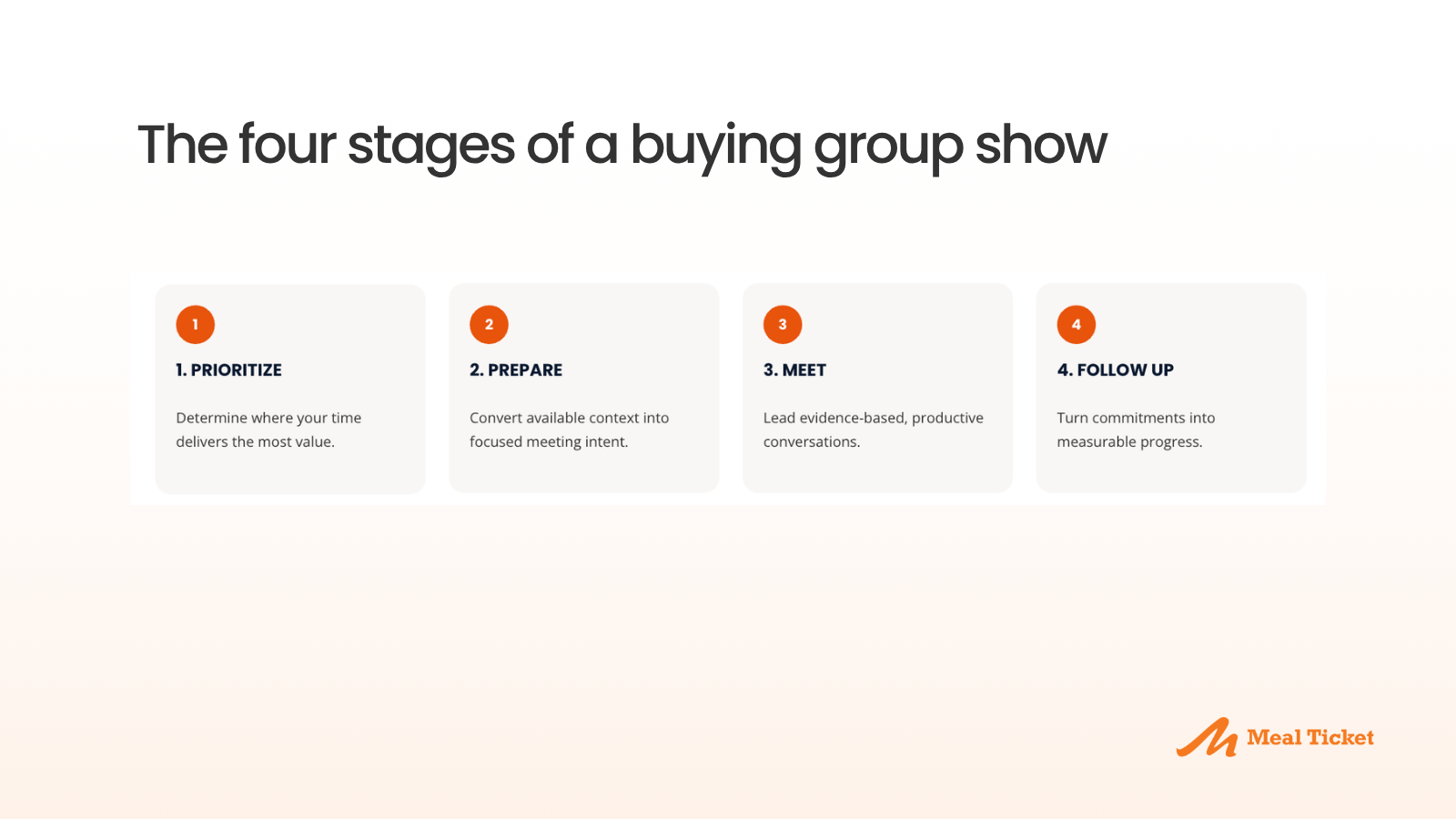
Start with your own supplier purchase data
Before anything else, pull your purchase history and current program terms for each supplier you plan to meet. Twelve months of volume, the trend, and every rebate and allowance already in place. This is the data every negotiation guide tells buyers to go gather, and as a distributor you already own it.
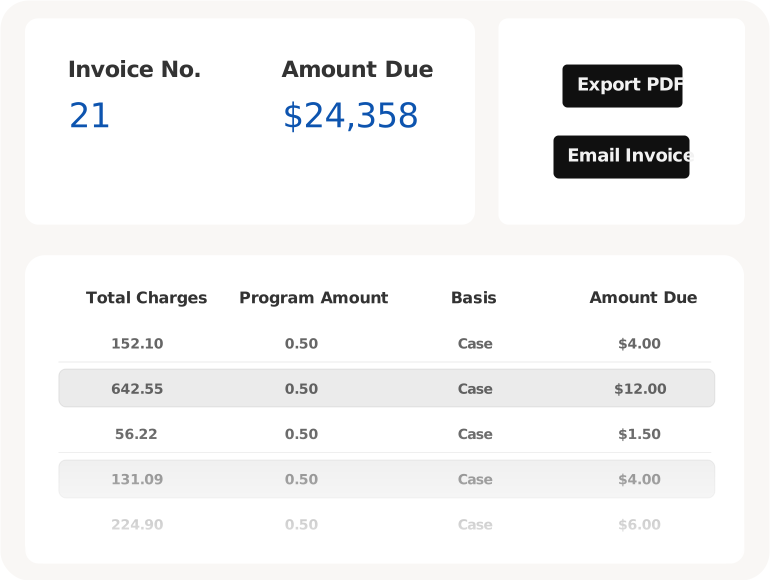
The catch is whether you can actually get to it. If your rebate and allowance programs live scattered across spreadsheets and inboxes, assembling a clean picture of the earned income you already have on the table for every priority supplier, the week before a show, is brutal. When that data sits in one place, prep is a report you run instead of a fire drill.
Rank your supplier meetings by opportunity
Rank suppliers by where a better program moves your P&L the most, then spend your calendar top-down. Start with high-volume suppliers whose programs look thin or stale, because that is where a prepared ask closes the biggest gap.
Most distributors do the reverse. They gravitate to the reps they know and the suppliers they like, then run out of hours before reaching the accounts that actually needed a conversation. Rank by two questions: where is the volume, and where is the gap. A large supplier with an under-managed program beats a small one with a tidy program, even if the small one is a friendlier meeting.
Set one clear goal for each supplier meeting
Walk into each meeting with a single, specific ask, not a wish list. The one program change, allowance improvement, or new-item commitment you most want from this relationship this year. One ask per meeting is what turns a pleasant chat into a signed change.
Vague goals produce vague outcomes. "See what they can do" ends in "let's stay in touch." "Move our rebate on this category from X to Y in exchange for a volume commitment" ends in a decision. Decide the outcome you want before you sit down.
Know your supplier alternatives before you negotiate
Before the meeting, know which competing manufacturer you could shift volume toward. Alternatives are leverage. A supplier negotiates differently when they know your business could move, and you can only make that case if you have done the homework on where else the category could go.
This is the piece distributors most often skip and negotiators never do. You simply have to know your options well enough that your ask is credible.
Decide your negotiation concessions in advance
Know what you are willing to trade before you ask for anything. Volume commitments, category consolidation, and promotional support are currency at a buying group show. Deciding your concessions ahead of time keeps you from giving away margin in the moment to close a deal that felt good.
Every real negotiation is an exchange. The manufacturer will ask what they get in return for a better program, and the prepared distributor already has the answer ready instead of improvising it across the table.
How is a buying group show different from a food show?
At a food show, the distributor is the host, running the event for its operator customers to drive case sales. At a buying group show, the distributor is the attendee and buyer, meeting manufacturers through a buying group or GPO to negotiate programs and allowances. One is about selling to operators; the other is about buying better from suppliers.
The distinction matters because the preparation is almost inverted. For your own food show, the work is marketing and logistics: invitations, booths, and follow-up that drives operator orders. For a buying group show, the work is analysis and negotiation: purchase data, priorities, and asks. If you do both kinds of shows in a year, do not let the muscle memory from one carry into the other.
What should distributors do after a buying group show?
After a buying group show, distributors should capture every commitment they make, then load the new terms into program tracking before they slip. The value of a buying group show is realized in the weeks after it, when negotiated allowances actually get billed and collected, not in the handshakes on the floor.
A program you agreed to but never entered into a system is a program you will under-collect on. Record new terms while they are fresh, assign an owner, and turn each commitment into a tracked next step. Distributors who treat follow-through as seriously as the meetings are the ones who see the allowances show up as earned income later in the year.
How do food distributors make buying group show prep repeatable?
Food distributors make buying group show prep repeatable by keeping purchase, program, and earned-income data in one system, so building supplier prep is a report you run instead of a spreadsheet scramble before every show. When the data is consolidated, the playbook runs the same way every year without the fire drill. It works every year when the data behind it lives in one place.
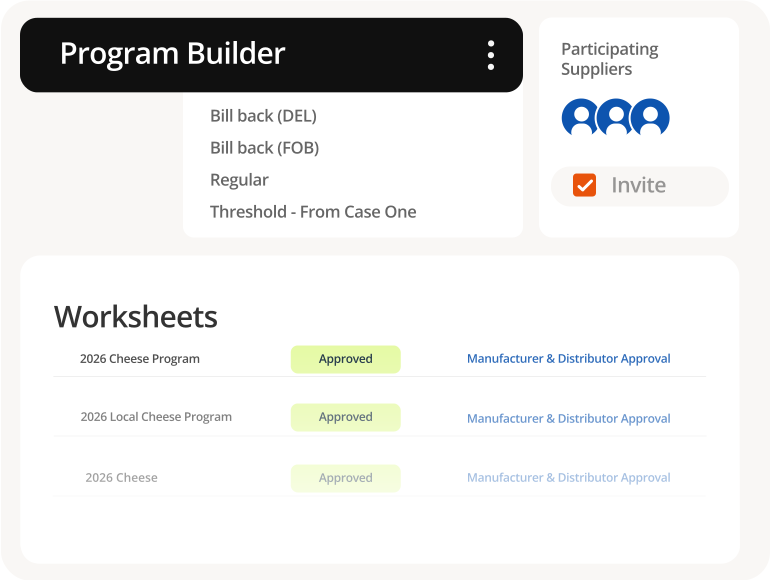
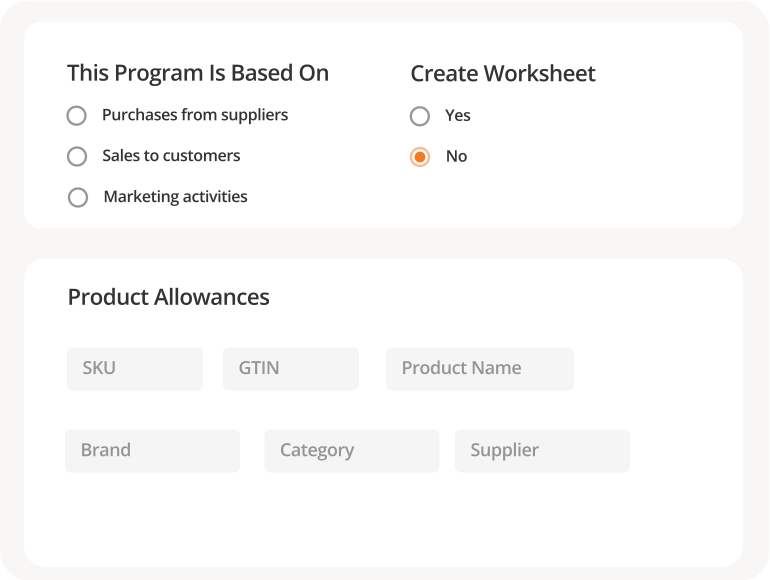
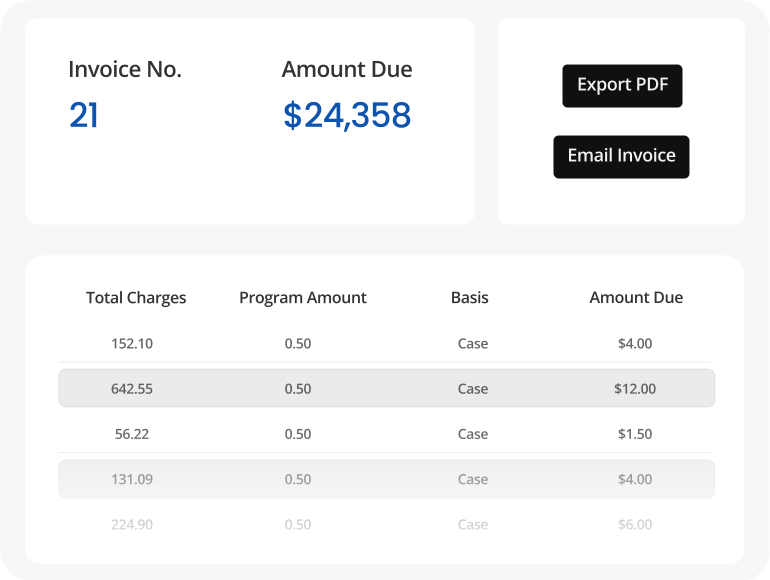
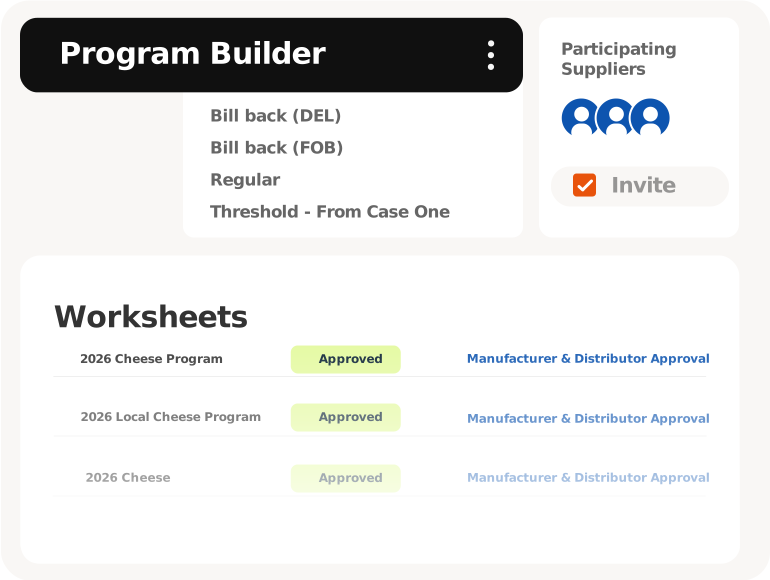
That is what TrackMax+, by Meal Ticket is built for. Consolidated purchase and program data means your supplier prep is a report, not a scramble. Allowance negotiation worksheets replace the email-and-spreadsheet back-and-forth, so what you agree to is captured cleanly.
Program management stops being a back-office task and becomes what it is: the difference between a buying group show you attended and one that paid for itself.
Frequently asked questions
What is the difference between a buying group and a GPO?
A buying group is usually a member-owned cooperative of distributors that pool purchasing to negotiate with manufacturers, while a GPO is a more formal entity that negotiates contracts on members' behalf. In foodservice the terms overlap and are often used interchangeably. Either way, aggregated volume wins better terms than one distributor could alone.
What are examples of foodservice buying groups?
Well-known foodservice buying groups include UniPro Foodservice, Golbon, and Frosty Acres Brands. Each organizes buying shows and negotiates manufacturer programs on behalf of its independent distributor members.
Do you have to be a member to attend a buying group show?
Generally, yes. Buying group shows are organized for the group's member distributors and the manufacturers who want to reach them, so attendance is usually tied to membership. If you are not a member, the usual path in is joining the group or attending as a prospective member.
How do buying groups get better pricing from manufacturers?
By combining the purchasing volume of many distributors into one larger commitment that manufacturers compete to win. That aggregated volume creates leverage on price, allowances, and program terms that an individual distributor rarely commands alone.
What is an allowance in foodservice distribution?
An allowance is money a manufacturer gives a distributor, either off the invoice or as a rebate, in exchange for buying, promoting, or moving a product. Allowances are a core part of distributor earned income, and negotiating them is a main reason distributors attend buying group shows.
Are buying group shows worth it for smaller distributors?
For many, yes, because the group gives them access to manufacturer programs and pricing they could not negotiate alone. The value depends less on size than on preparation: a small distributor that arrives with clean purchase data and clear asks can capture real program improvements.