



Dead net cost is the price a food distributor ends up paying for a case after subtracting every piece of supplier program money tied to it: off-invoice allowances, bill-backs, rebates, and growth incentives. It is almost always lower than the invoice price. But in foodservice, much of that money shows up weeks or months after the case ships, so dead net cost is only real once it has been collected.
That timing gap is the whole story. On margins as thin as distribution's, the back end carries a large share of the profit. If you're pricing, buying, and reporting off a dead net number you haven't collected yet, you're managing a forecast, not a fact.
Key takeaways
- Dead net cost is invoice cost minus the bill-backs, rebates, and incentives earned on that case.
- Off-invoice money is already in the invoice. Everything else arrives later, and only if someone claims it.
- Every case carries three costs: invoice cost, booked dead net, and collected dead net.
- The gap between booked and collected dead net is earned income at risk.
- Tracking dead net by item and supplier, not just in total, is how you find where that gap opens.
What is dead net cost in food distribution?
Dead net cost is the final cost of a product once all the supplier money tied to it has come off: the allowance already on the invoice, plus whatever bill-backs and rebates the case earns afterward. For a food distributor, it answers a simple question: what did this case actually cost us, once the supplier programs paid out?
In formula form:
Dead net cost = invoice cost − bill-backs − rebates and incentives earned on the case
Off-invoice allowances don't appear in the formula because they're already baked into the invoice. The terms vary from company to company. Some teams say "net-net," some say "true net cost," and some use "dead net" only for the final, fully settled figure. Whatever your team calls it, agree on one definition before anyone quotes or reports off it.
What's the difference between invoice cost and dead net cost?
Invoice cost is what the purchase invoice says you paid. Dead net cost subtracts the program money that comes later. The gap between the two can be large, and it's easy to lose track of because it isn't visible on any single document.
Take a case of six #10 cans of crushed tomatoes with a $41.00 list price:
- Invoice cost: $39.00. The supplier's $2.00 off-invoice allowance is already applied.
- Bill-back: $2.50. Earned when the case goes to a contract account at the agreed lower price, once you file the claim.
- Annual growth rebate: $1.00. Earned only if the year's volume beats the target.
- Booked dead net: $35.50. $39.00, minus $2.50, minus $1.00.
On paper, that case costs $35.50. The invoice says $39.00. Which number your team uses depends on whether the $3.50 in between actually comes back.
How does manufacturer money reach a distributor?
Supplier program money takes one of three routes to a distributor, and each route arrives at a different time with different conditions attached. (For the full vocabulary, see our guide to rebates, allowances, bill-backs, and deviated pricing.)
Only the first route is certain on the day the case ships. The other two depend on terms being met and on someone doing the work to collect.
What's the difference between booked and collected dead net cost?
Booked dead net cost is what you expect a case to cost once the programs pay out. Collected dead net cost is what it actually cost once the money came in. The difference between the two is earned income you counted on and didn't receive.
Back to the tomatoes. Say the bill-back claim for that contract account never gets filed, and the growth target falls short at year-end. Collected dead net stays at $39.00, $3.50 above what was booked. If that item moves 2,000 cases a year, that's $7,000 on one line of one supplier's program.
Nobody made a bad decision in that example. The money just never made it back. That's why booked-vs-collected is worth watching as its own number, supplier by supplier. It's the same problem we cover in rebate leakage, seen one case at a time.
Should you quote customers off invoice cost or dead net cost?
There's no single right answer, and it depends on how reliably you collect. Quoting off invoice cost alone can leave you uncompetitive against distributors who price with program money in mind. Quoting off a booked dead net you don't reliably collect can mean selling below your real cost.
A practical middle ground is to count only the program money you have a track record of collecting on that item and supplier, and to revisit that number as your collection rate improves. If you sell on cost-plus contracts, check how each contract defines "cost" before netting anything out. That's a question for your contracts and legal team, not a pricing spreadsheet.
It also helps to know which programs are worth the most. Our playbook on negotiating supplier allowances covers how to use your purchase history to get better terms in the first place.
How do you track dead net cost without spreadsheets?
To track dead net cost reliably, you need three data sets tied together at the item level: what you bought and paid, what each supplier program says you earn, and what you sold, to whom, at what price. Spreadsheets can hold each one. Keeping them connected across hundreds of suppliers and thousands of items is where manual tracking gets expensive.
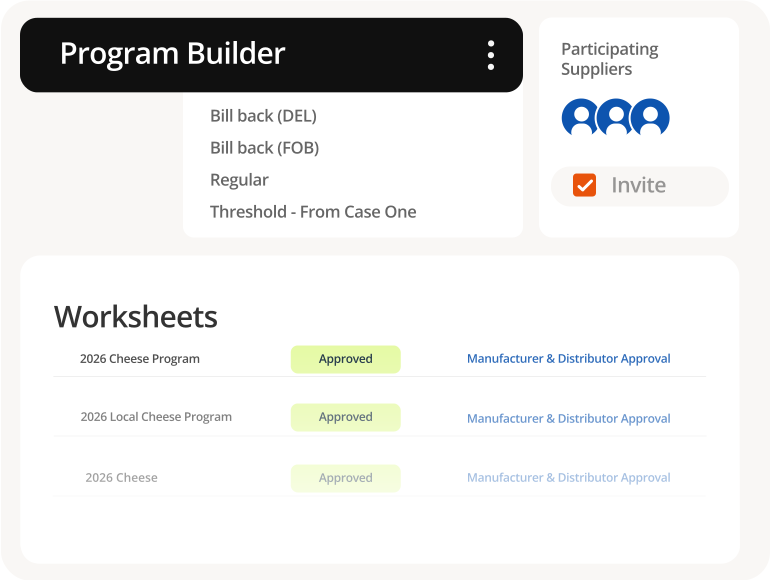
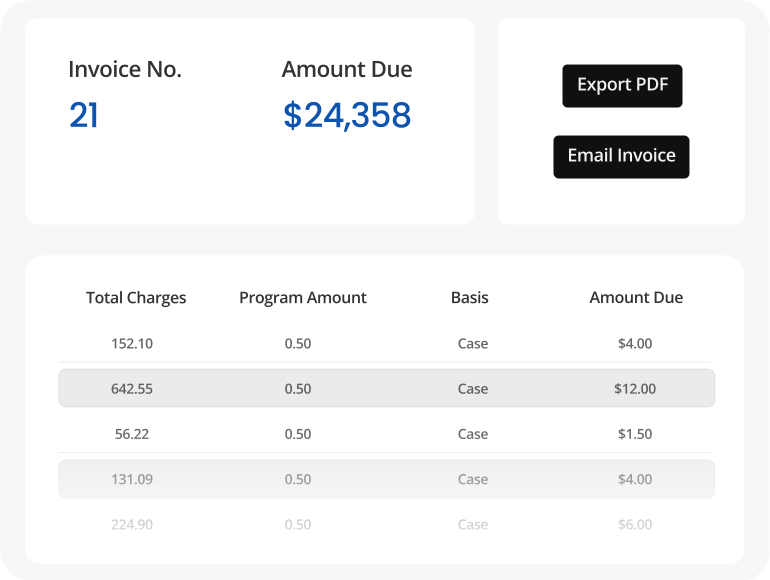
TrackMax+, by Meal Ticket, is built for exactly this. It consolidates sales, purchase, and program data into a single source of truth, captures earned income that manual processes miss (including redistributor sales and pass-throughs), manages program dependencies and clawbacks, and automates invoicing and reconciliation. Distributors using TrackMax+ capture 1–3% more purchase rebate income. To size the opportunity in your own business, try the rebate ROI calculator.
Want to see your booked and collected dead net side by side? Get a demo of TrackMax+.
Frequently asked questions about dead net cost
What does dead net mean in foodservice?
In foodservice, dead net refers to the cost of a product after all supplier program money tied to it has been subtracted, including off-invoice allowances, bill-backs, and rebates. It's the distributor's true product cost, as opposed to the invoice price.
How do you calculate dead net cost per case?
Start with the invoice cost, which already reflects any off-invoice allowance. Then subtract the bill-back the case earns if it went to a contract account, and the share of any volume or growth rebate earned on it. The result is booked dead net cost. It becomes collected dead net cost once that money actually arrives.
Is dead net cost the same as landed cost?
Not usually. Landed cost typically adds freight and other costs to get product into your warehouse. Dead net cost subtracts supplier program money. Some distributors combine the two into a single "net landed" figure, so confirm which definition your team uses.
Why is dead net cost different from what a distributor actually collects?
Because bill-backs and rebates are paid after the sale and only when terms are met and claims are filed. If a claim is missed, a growth target falls short, or earned income is clawed back, the collected cost ends up higher than the booked dead net.
Who uses dead net cost at a food distributor?
Finance uses it to report true margin and accrue earned income. Pricing and sales use it to decide how low they can quote. Purchasing uses it to compare suppliers on what a product really costs, not just the invoice price.
Know what every case actually cost you
TrackMax+ brings your sales, purchase, and program data together in one place, so dead net stays accurate after the case ships. Book a demo today.