


To negotiate supplier allowances, walk in with your own purchase data and a specific ask for each program. Show the manufacturer, in numbers, how much you buy and where the relationship could grow, then structure the ask by program type: a better volume rebate, a growth incentive, off-invoice support, or a bill-back. The distributors who negotiate from evidence, not email threads, capture better allowances, and an allowance negotiation worksheet is what keeps the whole thing organized.
This is a data-backed playbook for supplier allowance negotiation, written for a distributor negotiating directly with a manufacturer. Most negotiation advice is generic or written for the restaurant side of the table. This is the distributor's side.
Key takeaways
- Your purchase data is your leverage. The volume you already move is the strongest argument for a better allowance.
- Structure the ask by program type, not as one vague request: volume rebate, growth incentive, off-invoice, or bill-back.
- Decide what you will trade before the meeting. Volume commitments and promotional support are your currency.
- Use an allowance negotiation worksheet instead of email threads and phone calls, so nothing agreed to gets lost.
- The negotiation only pays off if you track and collect what you agreed to. A worksheet, and a system behind it, is how.
What is supplier allowance negotiation?
Supplier allowance negotiation is the process a distributor uses to agree with a manufacturer on the allowances, rebates, and program terms it will earn, in exchange for buying, promoting, or growing that supplier's products. Done well, it is a data-driven conversation about what the distributor's business is worth to the supplier, not a request for a discount.
Every allowance is a two-sided deal. The supplier wants more volume, better placement, or a push behind a new item. The distributor wants a better rate, more support, or funding for a specific account. A good negotiation trades one for the other on terms both sides can measure.
It matters because allowances are earned income, and earned income is a large share of distributor profit. What you negotiate on the program side is where much of the real profit is won or lost.
What data do you need to negotiate a supplier allowance?
To negotiate a supplier allowance, bring four data points for that manufacturer: your purchase volume and its trend, where the supplier sits in your category mix, the programs and allowances already in place, and the competing manufacturer you could shift volume toward. Together they show, in numbers, exactly what your business is worth and where it could grow.
Data is what turns a request into a negotiation. Without it, you are asking for a favor. With it, you are making a case.
The four inputs, and why each one matters:
- Volume and trend. How much you buy, over twelve months, and which direction it is moving. Growing volume is an argument for a better tier. Flat volume is a prompt to ask what would earn more of your business.
- Category mix. Where this supplier sits against the rest of the category, so you know how much of your business is genuinely in play.
- Current programs. Every allowance and program term already in place, so nothing gets renegotiated from scratch or quietly forgotten.
- Alternatives. The competing manufacturer you could move volume toward. You do not have to threaten anyone. You just have to know your options well enough that the ask is credible.
If you are gathering this for a specific event, the same preparation drives negotiating allowances at a buying group show. Year-round, it is the foundation of every allowance conversation.
How do you structure an allowance ask by program type?
Structure an allowance ask by program type instead of making one vague request. Each program type answers a different goal: a higher volume rebate rewards total purchasing, a growth incentive funds expansion, an off-invoice allowance lowers your cost now, and a bill-back funds a specific target account. Matching the ask to the goal is what makes it easy for the supplier to say yes.
A single "can you do better on price?" is easy to decline. A specific, structured ask tied to a program the supplier already runs is much harder to wave off. For the definitions behind each of these, see the rebate and allowance glossary.
Volume rebates: negotiate the next tier
If your purchases are close to the next volume bracket, that is your opening. Ask the supplier to move you to the higher tier, or to lower the threshold, in exchange for a volume commitment you can actually hit. The data makes the case for you.
Growth incentives: tie the ask to a plan
When you plan to expand a category, ask for a growth incentive that rewards the increase. This works because it aligns both sides: the supplier funds growth that benefits them, and you get paid for volume you were going to build anyway.
Off-invoice allowances: pull cost down now
When you need a better effective cost immediately, an off-invoice allowance is the cleanest ask. It reduces the price at purchase, so there is nothing to track and collect later. Use it when simplicity and cash flow matter more than a back-end program.
Bill-backs: fund a target account
When you are trying to win or hold a specific operator, ask the manufacturer to fund a deviated price through a bill-back. The supplier gets the placement with a target account, and you protect the margin on a deal you might not otherwise win.
What is an allowance negotiation worksheet, and why use one?
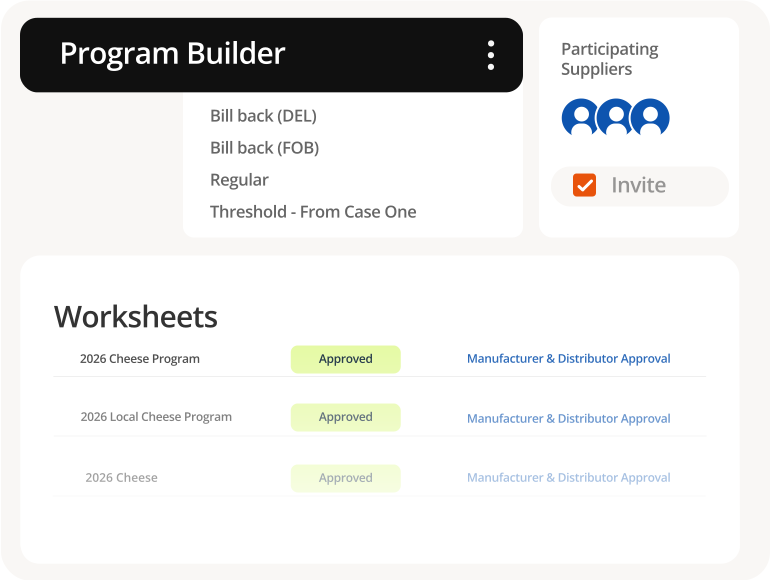
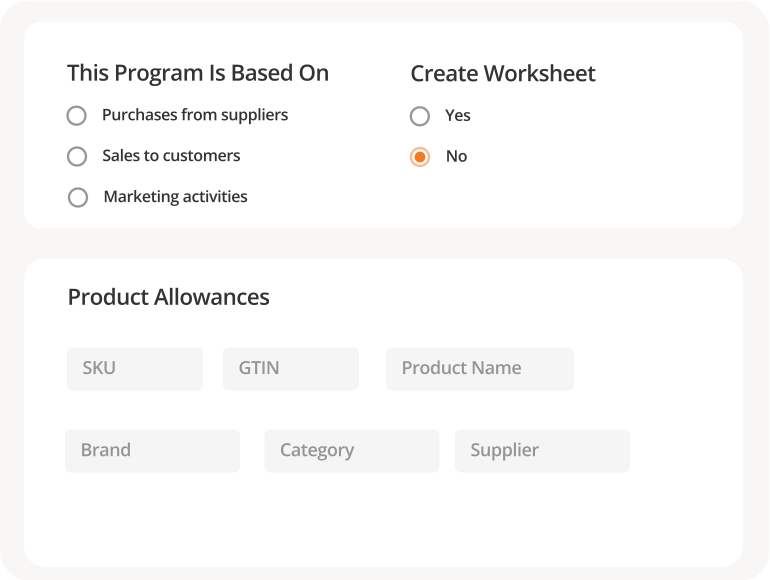
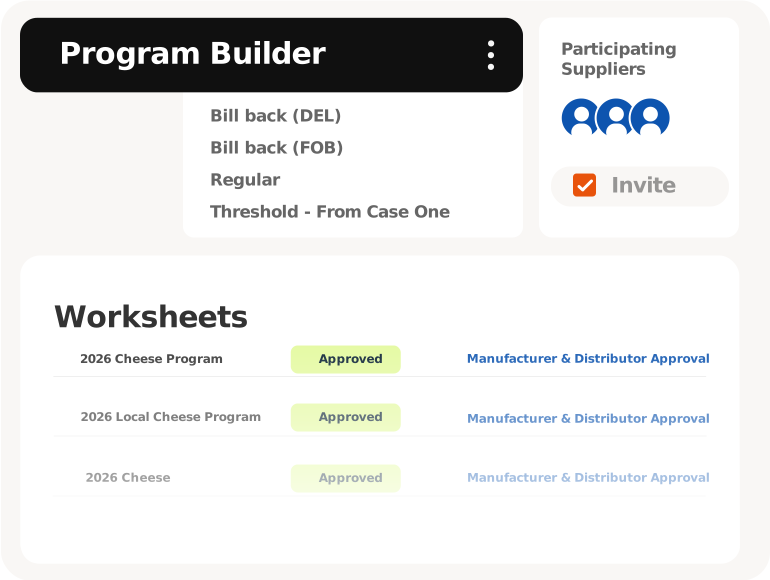
An allowance negotiation worksheet is a shared document that lays out, for each supplier, your purchase data, current programs, the specific asks, and the terms as they are agreed. It replaces the scattered email threads and phone calls that most allowance negotiations run on, so nothing gets lost between the handshake and the invoice.
Most allowances are negotiated across email, phone, and memory, then typed into a spreadsheet weeks later, if at all. That is how agreed terms get forgotten and earned income slips away. A worksheet keeps the proposal, the negotiation, and the final terms in one place, visible to everyone who needs them.
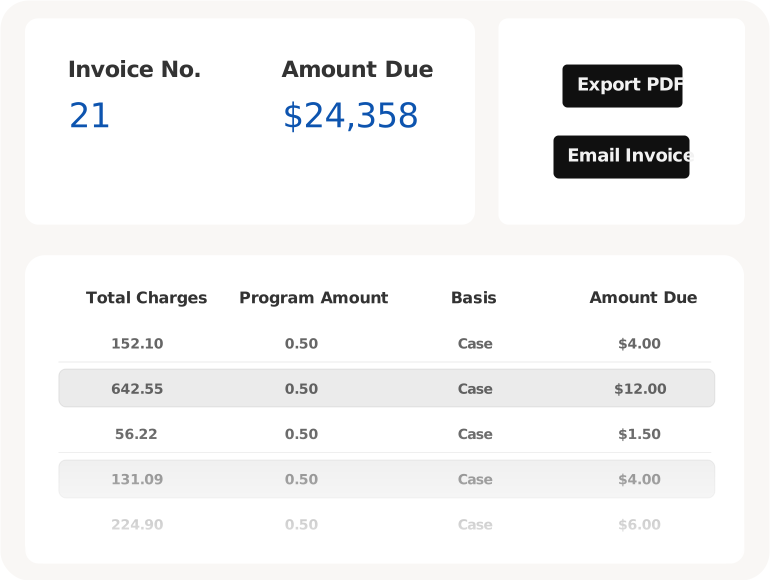
The bigger payoff is what happens after the handshake. When allowance terms are captured cleanly and flow into your program tracking, distributors using TrackMax+ Supplier Intelligence have cut the time spent managing supplier programs by up to 50%, because the negotiation and the tracking are no longer two disconnected jobs.
When should you negotiate supplier allowances?
Negotiate supplier allowances in Q3, when most suppliers finalize their budgets and marketing plans for the coming year. That timing puts your ask in front of the manufacturer while there is still money to allocate, ahead of the Q4 quarter when commitments get locked in. Waiting until the programs are already set means negotiating for scraps.
Q3 is budget season. A supplier deciding where next year's trade dollars go is far more receptive than one whose plan is already finished. Getting your data and your asks ready before that window is what separates a strong program year from a reactive one.
This timing also feeds the rest of the calendar. The Q4 quarter is where deals get locked in, and the allowances you negotiate now fund the promotions and food show programs you run later. Negotiate early, and everything downstream gets easier.
Frequently asked questions
What is a good allowance to ask a supplier for?
There is no universal number. A good allowance is one your data supports: ask against your purchase volume, your growth in the category, and what competing manufacturers offer for comparable products.
The right target is set by your leverage and the supplier's program structure, not by an industry average, so the work is in the data you bring, not a benchmark you copy.
How often should you renegotiate supplier allowances?
Most distributors renegotiate on an annual cycle tied to suppliers' budget years, with Q3 as the key window because that is when suppliers finalize marketing plans.
Review programs any time your volume, mix, or the competitive landscape shifts enough to change your leverage, rather than waiting for the calendar if something material has changed.
What can you offer a supplier in return for a better allowance?
Offer something that grows the supplier's business: a volume commitment, category consolidation toward their products, premium placement, or promotional and food show support.
Deciding what you will trade before the meeting keeps you from giving away margin in the moment just to close a deal, which is the most common negotiating mistake.
Can you negotiate allowances without a buying group?
Yes. Distributors negotiate allowances directly with manufacturers all the time, using their own purchase volume as leverage.
A buying group adds collective scale, but a single distributor with clean data and a specific ask can still negotiate meaningful program improvements on its own.
How do you track allowances after you negotiate them?
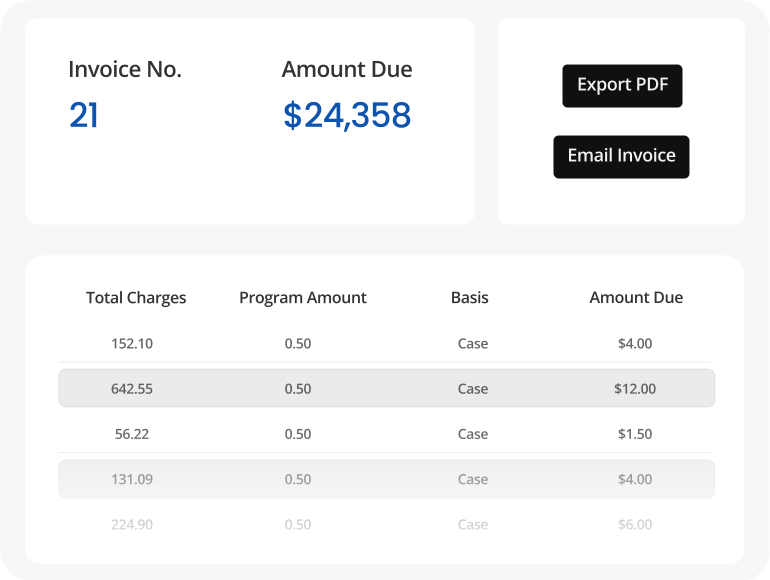
Record the agreed terms in your program tracking the day you agree to them, then accrue and invoice against them as purchases happen.
A negotiated allowance you never enter into a system is one you will under-collect on, which is why tracking is part of the negotiation, not an afterthought. See foodservice rebate management for how the full process works.
Why do negotiated allowances get lost?
Allowances get lost when the agreed terms live in an email thread or a rep's memory instead of a system. If nobody tracks the program, accrues what is owed, and invoices for it, the money you negotiated never gets collected.
The negotiation only pays off if the follow-through does, which is why the worksheet and the tracking behind it matter as much as the conversation.